
5G Antennas
What are 5G antennas?
A 5G antenna is a key component in a 5G New Radio network, responsible for transmitting and receiving wireless signals or electromagnetic wave energy. Compared with 4G antennas, 5G antennas are designed significantly differently to adapt to the characteristics of 5G technology.
5G NR (New Radio) is a core component of the fifth generation of mobile communication technology (5G) and is a new OFDM-based air interface design. It is designed to deliver higher speeds, lower latency, greater connection density, and greater energy efficiency than previous generations of technology, such as 4G LTE.
Characteristics of 5G antennas
Higher frequency band usage
5G networks use higher frequency bands, including millimeter-wave bands (e.g., above 24 GHz), which makes antenna design require smaller dimensions to accommodate the wavelengths of the higher bands.
Beamforming technology
G antennas make extensive use of beamforming technology to improve signal transmission efficiency and coverage by precisely controlling the direction of the signal.
Massive MIMO (Multiple Input Multiple Output)
5G antennas support massive MIMO technology, in which the antenna array contains a large number of transmitting and receiving units, thus dramatically increasing the data transmission rate and network capacity.
Miniaturization and integration
To adapt to the high-frequency band and high-density deployment requirements of 5G networks, the 5G antenna design is more miniaturized and integrated.
Basic concepts and features of 5G NR
Frequency Range
5G NR is divided into two main frequency ranges, with Frequency Range 1 (FR1) covering the frequency band below 6 GHz and Frequency Range 2 (FR2) covering the millimeter-wave band (20-60 GHz).
Carrier bandwidth and subcarrier structure
Supports wider carrier bandwidth and flexible subcarrier spacing configurations to accommodate different application scenarios and requirements.
Waveform and multiple access technology
New waveforms (e.g. CP-OFDM) and multiple access schemes (e.g. Non-Orthogonal Multiple Access NOMA) are adopted to improve spectral efficiency and connectivity.
Flexible frame structure
Dynamically configurable frame structure and time slot design to support ultra-low latency communications.
BWP (Bandwidth Part)
Allows different bandwidth parts to be defined within a carrier, each BWP has its numerology (parameters such as subcarrier spacing) to adapt to different service requirements.
What are the types of new 5G antennas?
New 5G antennas can be categorized into various types according to their design, purpose, and shape such as PCB antennas, flexible PCB antennas, microstrip antennas, rubber duck antennas, magnetic mount antennas, adhesive patch antennas, yagi antennas, sector antennas, fiberglass antennas, parabolic grid antennas, panel antennas, and so on.
Applications of 5G antennas
5G antennas are widely used in various scenarios, including the following application scenarios.
Urban coverage
In urban areas, 5G antennas are installed at base stations, street lights, building surfaces, etc. to provide extensive coverage.
Indoor coverage
In indoor environments such as shopping malls, airports, offices, etc., 5G antennas are used to provide high-speed wireless network connectivity.
Macro base stations
5G NR antennas are widely used in macro base stations to provide extensive network coverage and high-speed data transmission services.
Small base stations and micro base stations
In dense urban areas or indoor environments, 5G NR antennas are also deployed in small base stations and micro base stations to provide higher network capacity and finer coverage.
IoT and smart cities
5G NR antennas also support communication between IoT devices, providing reliable network connectivity for application scenarios such as smart cities and smart homes.
Glass antenna
With the development of material technology, 5G NR antennas can even be integrated into everyday objects such as glass windows, enabling more covert and efficient network deployment.
Specialized applications
For example, in fields such as self-driving vehicles, telemedicine, and industrial automation, 5G antennas provide stable, high-speed communication support.
Who manufactures new 5G antennas?
C&T RF Antennas Inc. manufactures indoor-outdoor new 5G antenna styles for your choice. Contact us for off-the-shelf 5G antennas or design customizations.
Showing 1–16 of 28 results
-
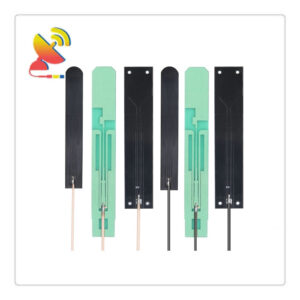
High-performance 3.5 GHz CBRS PCB Antennas
Read more -
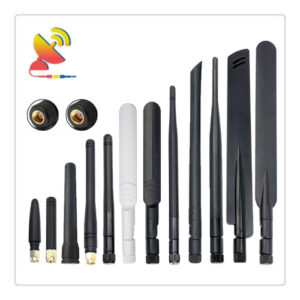
High-performance 5G CBRS Antenna SMA
Read more -
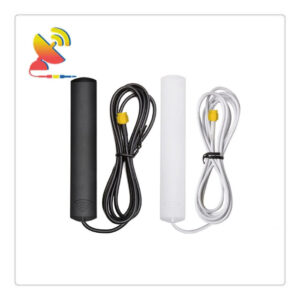
High-performance 5G NR Flat Patch Antennas
Read more -
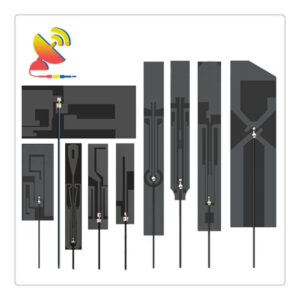
High-performance 5G NR Flexible Antennas
Read more -
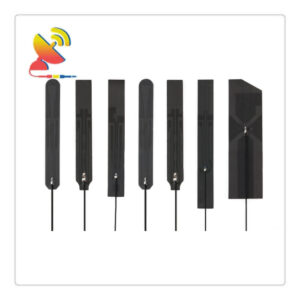
High-performance Flexible PCB 5G N78 Antennas
Read more -
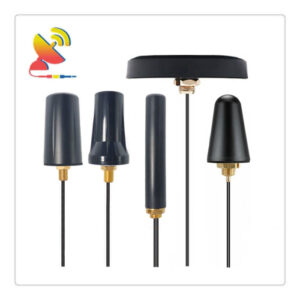
High-performance LTE 5G Dome Antennas
Read more -
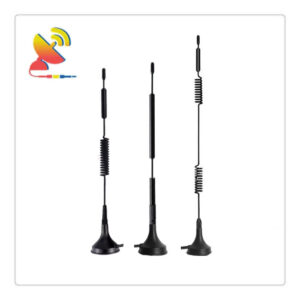
High-Performance LTE 5G Mag Mount Antennas
Read more -
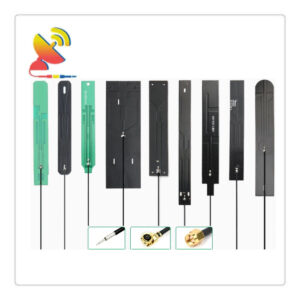
High-performance LTE 5G PCB Antennas
Read more -
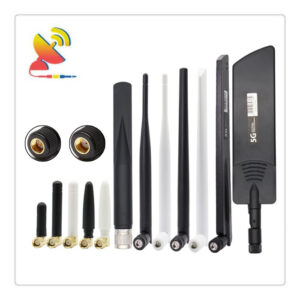
High-performance NR 5G SMA Antennas
Read more -
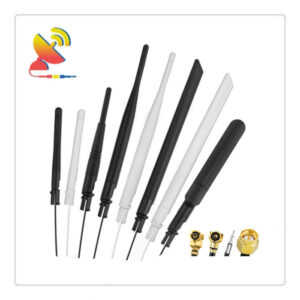
High-performance Omni GSM NB-IoT 4G 5G Antenna IPEX
Read more -
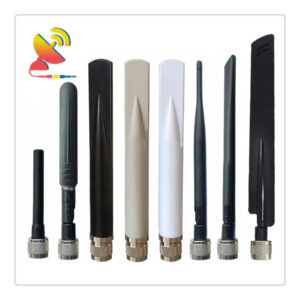
High-performance Rubber Duck 3.5GHz CBRS N-type Antennas
Read more -
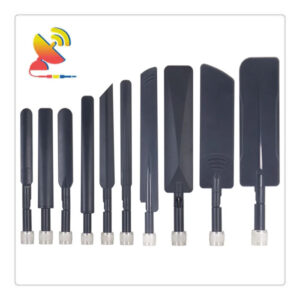
High-performance Rubber Duck 4G 5G N-type Antennas
Read more -
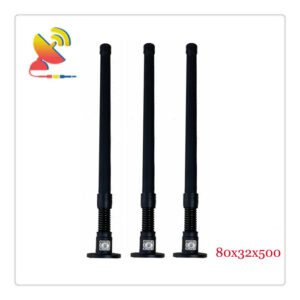
High-power 150W Anti-jamming Antennas ɸ80x32x500
Read more -
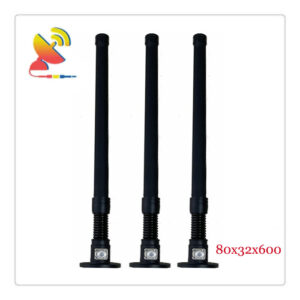
High-power 150W Car Jammer Antennas ɸ80x32x600
Read more -
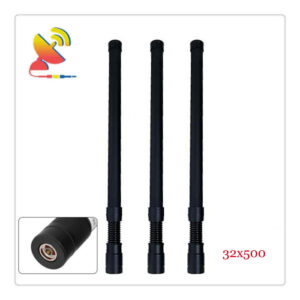
High-power 150W Drone Jamming Antennas ɸ32×500
Read more -
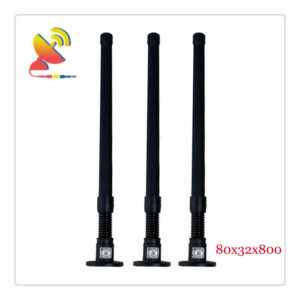
High-power 150W Jammer Antenna for Vehicles ɸ80x32x800
Read more
